
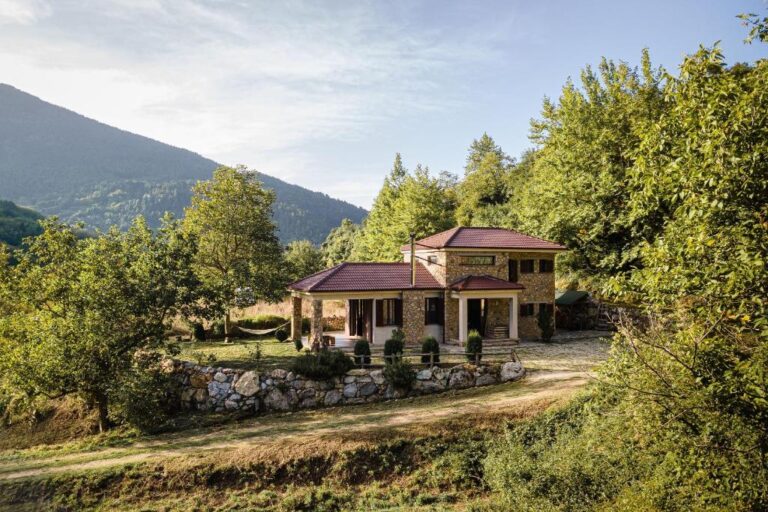
A traveller planning a trip to Spain no longer has to begin with a list of hotels.
They can begin with a conversation.
“Find me a quiet rural hotel within two hours of Madrid, surrounded by nature, with good food and hiking nearby.”
“Where should our 15-person team organise a three-day retreat in Spain in November?”
“Recommend boutique places near Marbella for a wellness retreat that don’t feel like large resorts.”
The traveller hasn’t mentioned a hotel.
They have described a need.
And that distinction could become increasingly important for independent hospitality businesses.
Hotel discovery is expanding beyond the traditional search box
For years, the digital journey was relatively familiar.
A traveller searched Google, visited an OTA, compared several properties and perhaps checked the hotel’s website before booking.
Those behaviours haven’t disappeared.
But another layer has arrived.
Google is incorporating generative AI into search, while platforms such as ChatGPT and Gemini allow travellers to research destinations conversationally.
That means properties increasingly need to consider a new question:
Can digital systems understand what makes your property relevant?
Not simply its name.
What it is.
Where it is.
Who it is suitable for.
What someone can experience there.
And why it might be relevant to a particular trip.
This could particularly matter for independent properties
Large hotel brands already have enormous digital footprints.
Independent properties often don’t.
Yet they may have exactly the characteristics people describe when asking for recommendations:
A restored finca surrounded by olive groves.
A small hotel in Sierra de Gredos suitable for hiking weekends.
A property outside Marbella capable of hosting a private company retreat.
A rural house in Asturias close to surfing and hiking.
A cycling-friendly finca in Mallorca.
These attributes are commercially valuable.
But only if they are digitally understandable and discoverable.
Being on Google is no longer the whole visibility strategy
This doesn’t mean SEO is disappearing.
Quite the opposite.
Search engines, maps, editorial coverage, reviews, destination websites, structured information and a property’s own website all contribute to its digital presence.
The difference is that discovery is becoming more fragmented.
For an independent hospitality business, this creates both risk and opportunity.
The risk is becoming invisible outside the platforms that already generate bookings.
The opportunity is to build a much richer digital presence around the place, territory, experiences and audiences the property can serve.
Think about what people might ask, not only what they might search
Consider Marbella.
A traditional keyword might be:
“hotel Marbella”
But conversational discovery allows much more specific requests:
“Where can a European company organise a sunny offsite in Spain in February?”
Suddenly, a property that would never compete for the largest Marbella hotel keywords could become relevant for a very specific reason.
The same applies to rural Spain.
Someone might not search for the name of a small property in Ávila.
They might ask for:
“a peaceful weekend in nature within two hours of Madrid in autumn.”
The commercial opportunity exists before the traveller knows the property’s name.
The question for hospitality businesses
You don’t need to become an AI expert.
And you certainly don’t need to spend your evenings trying to understand every new Google update.
But somebody responsible for your digital strategy should be asking:
How visible is this property in the new discovery landscape?
Because the way travellers find places is changing.
And remarkable places shouldn’t depend on being discovered by accident.
Hidden Grounds: helping remarkable places become easier to discover
Hidden Grounds works with independent hotels, rural stays and experience-led places to improve how they are discovered and how digital demand is turned into business.
We bring together SEO, AI search visibility (GEO), content strategy, demand generation, digital journeys, CRM and automation.
Not because every property needs more technology.
But because independent hospitality businesses should be able to benefit from the same level of digital thinking that larger organisations have had access to for years.
Want to understand how visible your property is across search and AI?
→ Talk to Hidden Grounds