
Being remarkable is not the same as being discoverable
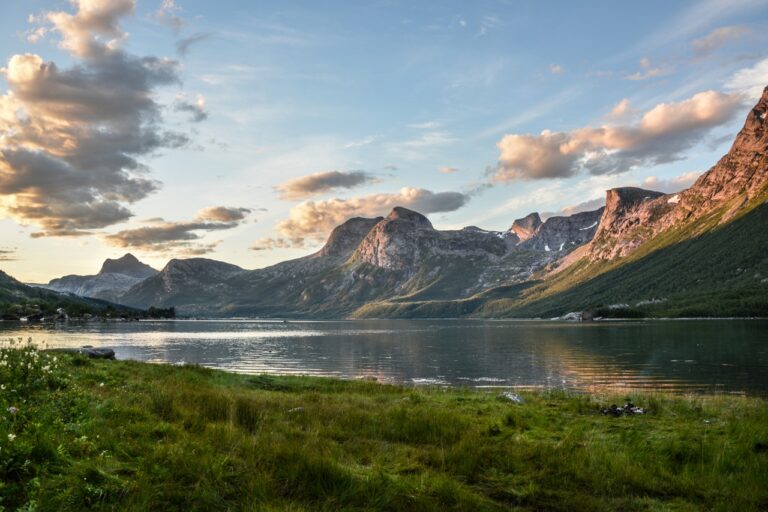
A stone house overlooking the Sierra de Gredos can offer silence, extraordinary food and a view guests remember for years.
But none of that guarantees that someone planning a three-day escape from Madrid will ever find it.
This is one of the central challenges facing independent hospitality businesses: the physical experience can be exceptional while the digital footprint remains surprisingly small.
Spain’s tourism market makes that gap increasingly important. International visitors reached 96.8 million in 2025, while international tourism expenditure reached €134.7 billion. Importantly, spending grew by 6.8%, faster than arrivals, suggesting that competing for the right visitor — rather than simply more traffic — matters increasingly. Turespaña
For independent hotels, rural stays and experience-led properties, visibility therefore needs to extend beyond ranking for “[hotel] + [destination]”.
Search is becoming an ecosystem
A traveller looking for a weekend outside Madrid might search Google for:
“boutique rural hotel near Madrid with hiking”
But another traveller might ask an AI assistant:
“Where can I take my team for a three-day retreat within two hours of Madrid?”
Someone else might discover the destination through Google Maps, Instagram, an article about the Sierra de Guadarrama or a recommendation for cycling in the area.
These journeys require a broader approach to discoverability.
Traditional SEO remains important. But properties should increasingly think about Search + Local + Content + GEO (Generative Engine Optimisation).
1. Own your destination
A property should not only have pages about rooms.
It should demonstrate knowledge of its territory.
A rural hotel near Candeleda, for example, could build useful resources around the Sierra de Gredos: hiking routes, seasonal experiences, autumn weekends, local producers, birdwatching, corporate retreats from Madrid or where to eat nearby.
That content creates multiple paths through which someone can discover the property.
2. Build pages around reasons to travel
One of the biggest missed opportunities in hospitality SEO is structuring websites exclusively around the accommodation itself.
People do not always begin by searching for accommodation.
They search for something they want to do.
That could be:
“corporate retreat Spain”
“cycling hotel Mallorca”
“yoga retreat Andalusia”
“weekend in nature near Madrid”
“Christmas rural getaway Spain”
A property capable of serving these needs should make those use cases explicit.
3. Make your information easy to understand
AI discovery increases the importance of clear information.
Location, capacity, facilities, experiences, food, transport connections, accessibility, nearby activities and the types of stays a property is suitable for should not be hidden inside beautiful but vague copy.
A machine — and a human — should be able to understand exactly what your place offers.
Territory is an SEO asset
This becomes particularly interesting in Spain because demand is geographically uneven.
In July 2025, the Balearic Islands recorded more than 250,000 rural-tourism overnight stays and a 65.7% occupancy rate. Mallorca alone exceeded 185,000 rural overnight stays, while Menorca reached a 71.7% occupancy rate. INE
Compare that with January, when national rural accommodation occupancy was only 9.5%. INE
That difference creates opportunities for much more sophisticated content strategies.
Instead of publishing another generic article titled “10 reasons to visit us”, a property could build campaigns around:
Autumn in the Sierra de Gredos.
Remote-work escapes in northern Spain.
Winter wellness weekends in Andalusia.
Corporate offsites on the Costa del Sol.
Cycling camps in Mallorca.
SEO becomes considerably more useful when it connects place + audience + intent + season.
What should an independent property do now?
Start by asking a simple question:
If someone had never heard of our property, through how many relevant digital journeys could they realistically discover us?
If the answer is essentially “Booking.com and our brand name on Google”, the problem isn’t necessarily the property.
It’s the discovery system around it.
How Hidden Grounds helps
Hidden Grounds works with independent hotels, rural stays and remarkable spaces to build stronger digital discovery systems.
That can include SEO and GEO strategy, content architecture, local search, demand generation, landing pages, AI-supported content workflows, lead management and marketing automation.
The goal isn’t to add more marketing activity for the sake of it.
It’s to identify where potential demand is being lost — and build a more intelligent way of capturing it.
Want to understand how discoverable your property really is?
→ Request a Hidden Grounds Visibility Audit